


Packing plastic-free lunches can sometimes feel like a challenge, but it doesn’t have to be! Ever struggled with finding a sustainable option for your kid’s lunch? Using colorful bento boxes and reusable snack bags can really freshen up the routine and keep pesky plastic baggies out of the picture. It’s about making lunch packing not just practical, but also enjoyable!
Involving the kids when choosing lunch items can lead to healthier choices. Think wraps filled with hummus and seasonal veggies. How great is it when kids get excited about what they’re eating? Plus, you can throw in some fun dips like guacamole or salsa to keep lunchtime lively. It’s amazing what a little involvement can do!
Don’t forget about stainless steel containers and beeswax wraps—they’re perfect for keeping everything fresh without the waste. Honestly, prepping meals ahead of time can save you a lot of stress during busy mornings. The best part is that when everything is planned out, it makes packing lunches feel like a breeze instead of a chore!
So, what else can you do to shake things up? Consider trying these tips:
- Mix and Match: Use leftovers creatively. A stir-fry can easily become a wrap for lunch the next day.
- Snack Variety: Instead of the usual fruit, include things like roasted chickpeas or homemade energy balls.
- Theme Days: Have taco Tuesday or sandwich Wednesday—make it fun and something to look forward to!
Truth is, anyone can pack a fun, waste-free lunch with a bit of creativity. You don’t need to make it complicated; just keep it simple, colorful, and enjoyable! Why not make packing lunches a family activity? Embrace the challenge together and watch mealtime become a highlight of the day.
Key Takeaways
- Use reusable containers like stainless steel and bento boxes to reduce waste when packing lunches.
- Involve kids in meal planning and packing to foster responsibility and creativity.
- Incorporate seasonal fruits and veggies for fresh, diverse, and zero-waste lunch options.
- Utilize eco-friendly tools such as beeswax wraps and reusable snack bags to minimize plastic usage.
- Meal prep on weekends to streamline lunch packing and reduce food waste during the week.
How to Pack a Zero-Waste Lunch: Essential Steps and Benefits

Packing a zero-waste lunch can feel a bit daunting at first, but trust me, it doesn’t have to be! Instead of letting that overwhelm you, let’s break it down. Start by gathering some reusable containers. Kids are drawn to fun shapes, so bento boxes can turn lunchtime into something exciting.
Planning your week’s lunches is a game plan you don’t want to skip. Focus on seasonal fruits and veggies—this isn’t just good for reducing food waste; it keeps your meals fresh and fun. And how about getting your kids involved in the packing process? It gives them a sense of responsibility and a taste of sustainability. Plus, they might just surprise you with their creativity!
Don’t forget the little things either. Switching from plastic baggies to reusable snack bags is an easy step that can have a big impact. Honestly, every choice you make counts.
By packing a zero-waste lunch, you’re not only cutting down the trash—you’re also making a statement against plastic pollution and teaching kids habits that last a lifetime. So, why should you care about this? Because every small effort adds up to something bigger!
In short, dive into the world of zero-waste lunches and make it a family adventure. What’s one new habit you can try this week? Choosing reusable produce bags made from 100% organic cotton can enhance your zero-waste efforts by keeping food fresh and reducing plastic waste.
Must-Have Tools for Zero-Waste Lunch Packing

Packing a zero-waste lunch can feel overwhelming, but it really doesn’t have to be. Ever found yourself with a bag full of single-use plastics after a lunch on the go? Let’s change that with some simple, reusable tools.
First off, reusable bags are a must-have. I love the ones from The Art of Lunch; they’re cute and practical for packing snacks or sandwiches. Next, consider adding some stainless steel food containers. Brands like U-Konserve and LunchBots have these great lightweight options that are perfect for keeping your lunch fresh without the waste of plastic containers.
When it comes to dips or sauces, you’ll want to grab some leak-proof condiment containers. Trust me, nobody wants a lunch bag that smells like last week’s ranch dressing. Look for something like LunchBots Dips to keep your condiments safe and sound.
And don’t forget about reusable utensils! They can come in handy cases, so you’ll never have to worry about forgetting them at home. It really makes eating lunch out much easier.
To separate your different food items without using plastic wrap, try silicone baking cups. They’re great for keeping everything organized and mess-free.
Additionally, using reusable cleaning cloths to wipe down your containers after lunch not only keeps things tidy but also supports sustainable cleaning practices.
With these essentials, you’re all set to pack delicious, eco-friendly lunches. Isn’t it amazing how simple changes can make such a big difference? What will you pack for lunch first?
Practical Containers for Packing Unpackaged Food
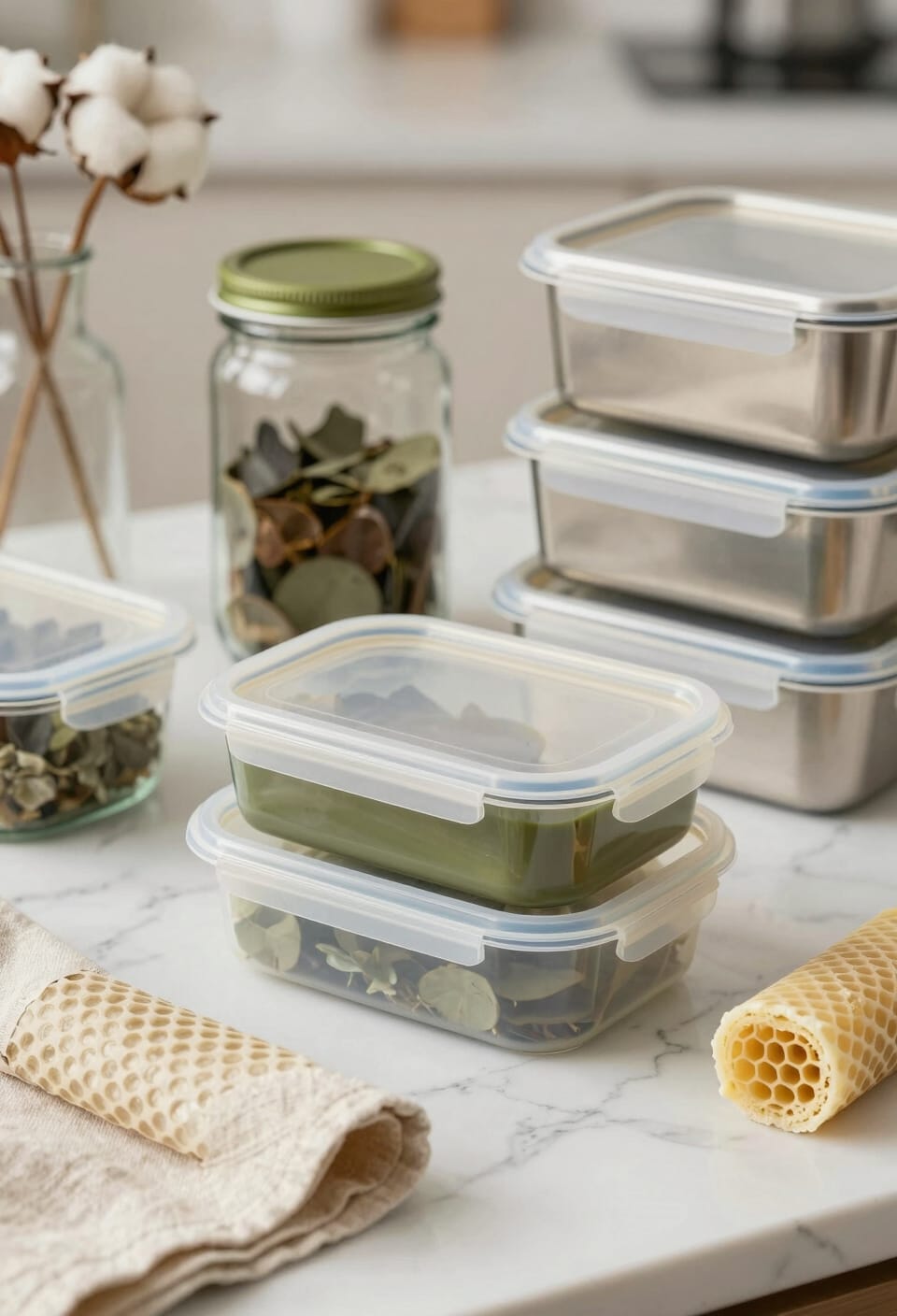
Packing unpackaged food can be a bit of a challenge, especially if you’re trying to keep things fresh and minimize plastic use. One thing I’ve found super helpful is to choose the right containers. For quick snacks, reusable snack bags are fantastic. I really like options from The Art of Lunch—they’re perfect for tossing in your bag.
When it comes to main meals or heartier snacks, you can’t go wrong with sturdy metal food containers. Brands like U-Konserve and LunchBots have some great ones that are totally leak-proof and durable. And let’s be real—nobody wants a mess in their bag, right? I especially love the LunchBots Leakproof Rounds for things like yogurt or applesauce. They keep everything contained with no spills, which is a total win.
If you need to wrap up sandwiches or smaller snacks, give beeswax wraps a try. They’re eco-friendly, and the best part is you can customize them to fit whatever you’re wrapping. Plus, it feels good to be reducing waste! Choosing eco-friendly reusable bags to carry your packed lunch adds an extra layer of sustainability and convenience.
Fun and Easy Homemade Lunch Ideas Without Packaging
Packing a lunch without plastic can feel challenging, but it’s definitely doable. You want tasty and fun meals that are good for you and the planet, right? Try wraps loaded with hummus, crunchy veggies, and seasonal fruit for a fresh twist. These are perfect for breaking up the monotony of sandwiches!
When school days roll around, batch cooking can save you a ton of time and hassle. Think about making a big bowl of pasta salad or a batch of chicken meatballs. Store them in reusable containers, and you’re ready to go! You can even layer yogurt with granola and your favorite fruits in glass jars for a sweet treat. It’s not just delicious; it looks pretty too!
And don’t forget about hydration—fill up reusable water bottles to go with your delicious meals. It’s simple, eco-friendly, and eliminates the need for plastic baggies. Reusable snack bags made from eco-friendly materials can be a great alternative to single-use plastic for storing snacks and small treats.
So, what’s the trick to keeping lunches exciting? Pack a vibrant variety of foods! A colorful assortment can make lunchtime feel more special and keeps the waste down.
At the end of the day, it’s about enjoying what you eat while being mindful of the environment. What creative packaging-free lunch ideas have you tried lately?
Involving Kids in Plastic-Free Lunch Planning
Have you ever found yourself staring at a mountain of plastic wrappers and wondering how to make lunchtime more eco-friendly? Involving your kids in planning their plastic-free lunches can turn out to be a fun journey for both of you! Ask them to choose their favorite fruits, veggies, and snacks. This not only cuts down on food waste but also gets them excited about healthier choices.
Meal planning isn’t just about filling lunch boxes. It’s a great way to talk about sustainable living. You can brainstorm playful ways to use leftovers and rethink packaging solutions together. The best part is when kids get to wash the fruits and pack their own reusable containers—they really enjoy playing a part in the process!
So, why does this matter? Discussing the downsides of single-use plastics can help kids see the bigger picture of their choices. With their input, you’ll end up with lunches they’ll be eager to munch on.
In short, getting kids involved in lunch planning builds their understanding of eco-friendly practices while making the whole experience more enjoyable. One way to make this even simpler is to use reusable food pouches that are BPA-free and dishwasher safe for easy cleaning.
What’s your favorite way to get kids excited about lunch?
Keeping Food Fresh Without Single-Use Plastics
Keeping our food fresh without single-use plastics can sometimes feel like a real challenge, doesn’t it? But it doesn’t have to be difficult! Instead of grabbing that roll of plastic wrap, think about using beeswax wraps. They’re compostable and do a great job of keeping your sandwiches fresh and delicious.
Have you ever been frustrated with those single-use yogurt and applesauce pouches? Here’s the trick: invest in reusable silicone ones. Not only do they cut down on waste, but they also keep your food fresh, and they’re super easy to clean.
When it comes to storing meals, glass containers are a fantastic choice. Look for wide-mouth jars, especially for salads; they help keep everything crisp and organized. And here’s the best part: stainless steel containers can keep your pasta or chili hot, without worrying about any harmful chemicals leaching into your food.
Don’t forget to pack ice packs for perishable items! They’re essential for those days when the kids need to take lunch along. Keeping food cool is key, right?
In short, there are plenty of smart ways to pack lunches without relying on single-use plastics. Plus, incorporating eco-friendly composting options for leftover scraps is a great way to reduce waste.
So, next time you prep a meal, think about how you can be creative in making it easy and eco-friendly! What’s one change you’re excited to try?
Return Strategies for Reusable Lunch Items
Ever found yourself scrambling around the house trying to gather up your kid’s reusable lunch items before school? It can feel like a daunting task, and if you’re like me, you dread the thought of those precious containers going missing. So, how can we make sure these items make it home at the end of the day?
One effective strategy is to clearly label everything. Seriously, it’s like giving your lunch items their own names! When everything’s marked with your child’s name or a cool sticker, you’re not just making them identifiable, but also adding a fun personal touch that kids love.
Now, it’s key to create a routine. Checking lunch bags and bins for missing items might feel tedious, but it helps build responsibility over time. Involving teachers in the process can also be a huge help. They can assist in returning any stray containers that may end up in the lost and found, so those items don’t just become permanent residents of the school.
Regularly reminding your kids about their lunch boxes and containers can spark discussions about why it’s important to be accountable. This not only fosters a sense of ownership but also teaches them valuable lessons about sustainability—important skills for life!
And don’t forget: getting your kids involved in cleaning and organizing their lunch supplies can really make a difference. When they help, they’re more likely to take care of these items and appreciate their reuse.
Choosing containers with airtight seals can further encourage kids to care for their lunch supplies by preventing leaks and messes, making cleanup easier and improving their overall experience.
Meal Prep Tips for Easy Zero-Waste Lunches
Packing lunches can feel like a chore, especially when you’re trying to avoid waste. So, how can you make this process easier? Meal prepping on the weekends is a fantastic solution. Chop up seasonal veggies and cook your favorite grains ahead of time. This way, you can throw together zero-waste lunches in no time and keep things interesting on your plate!
Planning your meals for the week has some great benefits. It helps minimize food waste—no more forgotten produce at the back of the fridge. Plus, it cuts down on impulse snacking (we all know those unhealthy options pop up when hunger strikes unexpectedly). Try this: jot down a simple menu for the week and stick it on the fridge. You’ll find it makes packing your lunches a lot less stressful.
And let’s not overlook the power of good containers. Investing in sturdy, reusable lunch boxes can really make a difference. They keep your meals fresh without relying on single-use plastics. Honestly, there’s something so satisfying about opening up a well-packed lunch and knowing you’ve made a smart choice for both your health and the planet.
The best part? You get to be creative! Mix and match leftovers and seasonal ingredients for different flavor options throughout the week. It’s all about making meal prep fun and sustainable. Choosing containers made from 18/8 stainless steel ensures durability and food safety for your zero-waste lunches.
Frequently Asked Questions
What Are Some Benefits of Going Plastic-Free for Families?
Going plastic-free brings us health benefits, reduces our environmental impact, and offers cost savings. It fosters family bonding through creative lunches and provides educational opportunities about sustainability, making our meals healthier and more meaningful together.
How Can I Involve My Community in Plastic-Free Lunch Packing?
We can involve our community by organizing workshops, hosting local events, promoting school initiatives, sharing resources on social media, and participating in neighborhood cleanups. Together, we’ll inspire others to embrace plastic-free lunch packing!
What Are the Costs Associated With Reusable Lunch Packing Supplies?
When we think of reusable supplies, it’s like planting a tree: there’s an initial investment, but over time, families reap long-term savings. By exploring eco-friendly options and budget-friendly hacks, we maximize our contributions while minimizing costs.
How Can I Manage Food Waste While Packing Lunches?
We can manage food waste by using portion control strategies, shopping local produce, and meal planning tips. Incorporating composting techniques and creative reuse ideas for food scraps makes packing lunches both sustainable and simple.
What Are the Best Practices for Cleaning Reusable Containers?
We’ve all got containers that could moonlight as art pieces! Use effective cleaning techniques tailored to container materials, check dishwasher safety, employ sanitizing methods for stain removal, and don’t forget about odor control for freshness.


